

Blinded by the Dark
The Question I Asked God in My Hardest Season, and the Answer That Changed Everything

Most of us have a season we don’t talk about much—the one we’re still trying to make sense of, even years later. If you’re in one now, or you carry the weight of one you can’t quite set down, I’m glad you’re here. This is for you. —Kim M.
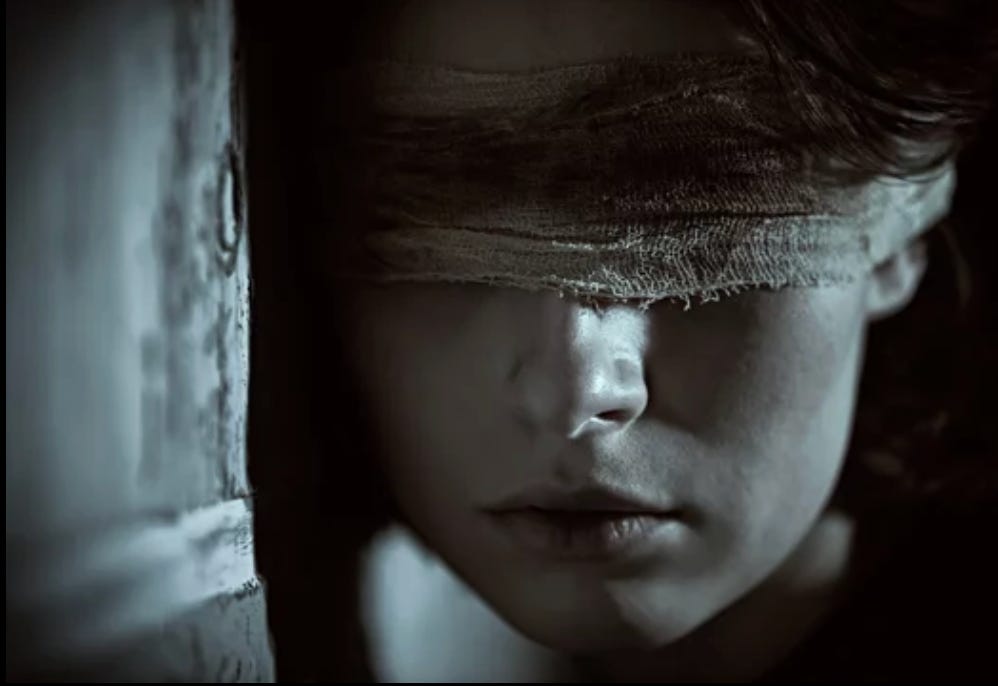
I set down my journal and said it out loud.
“It was the best of times. It was the worst of times.”
But for a long time, I could only see one of those things. For months, I fixated on the darkness, turning it over, cataloging the damage, believing if I stared long and hard enough into it, I could somehow make sense of it all. That I could bring back to life what had turned to dust in that season.
But I couldn’t.
Worst of all, somewhere in all the ruminating, the darkness stopped being something I was walking through and became the only thing I could see.
I wasn’t blinded by the light. I was being blinded by the dark.
When Charles Dickens penned the famous words, “It was the best of times, it was the worst of times,” in A Tale of Two Cities, he was writing about London and Paris in the years surrounding the French Revolution. Two cities with very different realities: London, relatively stable; Paris, simmering with rage that would soon erupt into the Reign of Terror.
That is exactly where I found myself. Not between two disparate cities, but between two disparate kingdoms—the kingdom of this world and the kingdom of God. And the longer I stared at the one kingdom breaking down, the harder it became to see the One who was holding me through it.
Two Kingdoms, One Life
If you have walked with God for any length of time, you know the tension. The kingdom of God is here, yet it has not fully come. We live in the in-between, where creation itself is still groaning and waiting to be made new (Romans 8:22). Darkness has many faces in this season. Whatever the source, it is real. But so is God’s light.
John 1:5 tells us, “The light shines in the darkness, and the darkness has not overcome it” (ESV). Notice the verb—it’s present tense: has not. Right now, in whatever you are walking through, the light is already winning. It may not feel that way from where you are standing.
I know that feeling well. In the middle of my darkest season, I cried out to God and asked why He had turned out all the lights, plunging me into the darkness alone. His answer stopped me cold:
“So you could see Me better.”
Not a comfortable answer. With it, God challenged my perception. Being plunged into sudden darkness didn’t mean He abandoned me. No light equals no God, right? But He was never absent. He was there, clearing the room of the substitutes I kept turning to for hope and support—counterfeits I mistook for His real love.
Like night lights placed strategically throughout a home to prevent tripping in the dark, I turned to lesser comforts to hold me steady when my world fell apart. God was not being unkind when He turned out those lights. He was showing me mercy by giving me the only Light that holds hope. He knew what I needed to see, and those imitators of God were affecting my vision.
Love That Steps Into Your Place
Dickens understood something about this, too. At the center of his novel stands Sydney Carton, a brilliant but self-loathing English lawyer who has wasted most of his life and believes himself worth very little. He falls in love with Lucie Manette, but she marries Charles Darnay—a man who happens to look almost exactly like Carton.
Years later, when Darnay is condemned to the guillotine in Paris during the Reign of Terror, Carton uses their physical resemblance to do something no one else can do. He drugs Darnay, takes his place in the prison, and walks to the guillotine in his stead. He does it, not to earn anything but because he has come to love Lucie enough that her happiness matters more to him than his own life. While the crowd screams for a death, love quietly offers one.
What Carton did for Lucie reflects what Christ did for us. Jesus endured the cross for the joy set before him (Hebrews 12:2). The darkness of crucifixion was fully present: betrayal, suffering, injustice, death. But underneath it all, another reality moved toward humanity, into a world groaning under the weight of sin, suffering, and brokenness. Christ went into the deepest darkness so that we would never mistake the impotent flicker of a night light for the Light that gives life.

The same love that compelled Christ to die for us on the cross is the same love God uses to turn us back to Him. He does not use fear. He does not use shame or threat. He uses the love that stepped into our place to pull us into His light. His mercy doesn’t push us toward the light. It draws us.
More Than a Feeling
I see this every time one of my granddaughters runs in to share some part of her world with me. She searches my face for approval and delight. The moment she finds it, something opens in her like a flower turning toward life-giving light. My joy for her becomes her strength. She doesn’t manufacture anything. She just turns toward someone who already loves her.
We are no different. We were made to be God’s delight.
Psalm 37 also tells us to delight ourselves in the Lord. We tend to read that as an instruction to feel happy about God. But the Hebrew word David uses, anag, carries something deeper. It means to be soft, pliable, at ease. To take such exquisite pleasure in someone that you become moldable in their hands.
Delight in the Lord is not a feeling to manufacture. It is a posture—a leaning into Him so fully that we let Him do what He has already been doing all along, turning out the false lights, showing us His true Light, and rescuing us in the very moments that felt most like abandonment.
Most of us chase after delight as though it were running from us. The truth is, God’s delight has been chasing us the whole time. We have always been His delight. We do not manufacture delight by running hard after it. We receive it by lifting our eyes from the wreckage, accepting the love Christ poured out on the cross, and trusting in what love has already done.
Look Up
I pick up the journal again.
The pages haven’t changed. The wreckage is still there in my own handwriting. I can still name what broke. I can still trace the damage. But I am no longer searching those pages for answers. I already found the answer. God was in the dark with me the whole time. I just couldn’t see Him because I fixed my eyes on the wreckage and let the lesser lights I was trusting blur the rest.
It really was the best of times. And it really was the worst of times. I can finally say both—and mean both. The worst of times did not cancel the best of times. The best of times grew right in the middle of it, the way light always does—quietly, faithfully, refusing to be overcome.
So whatever wreckage you have been staring at, look up.
The light has not gone out. The darkness has not overcome it. God is here, patient and steady, and His love is pulling you toward Him.
It will be the best of times. It will be the worst of times. And God…He is in it all.
A Prayer for When Darkness Seeks to Overwhelm
Lord, all I can see is the dark. I have stared at it for so long that I can no longer distinguish You from the shadows around me. I fixed my eyes on the wreckage and lost all sight. But You were beside me the whole time. You did not leave me alone in the worst of times. You came down into them and met me there.
So today I lift my eyes from the wreckage. I turn my face toward You. Make me soft in Your hands. Teach me to lean into You and to trust what Your love has already done on my behalf. Amen.

Want to continuing exploring the light side of things?
Recommended read:
EXCERPT:
I walked along the shoreline, waves tugging at my ankles.
The light is beautiful here.
It catches everything—bits of sea glass smoothed by time, broken shells scattered like forgotten stories, and a glint of some mystery buried just beneath the surface—turning the wet sand into a shimmering path.
Yet, not all light feels safe.
Over time, many of us learn to fear the light—not in the way a child fears the dark, but in the way a heart hesitates when it knows it will be fully exposed. Light doesn’t only illuminate what is lovely. It also reveals what we’d rather keep hidden.
Maybe that’s why so many of us live as though we need to manage the light: standing close enough to feel its warmth, but not so close that it exposes everything.
- We confess, but only what feels safe.
- We admit struggle, but only in past tense.
- We let people in, but only as far as we control the image they see.
👉 We think we are walking in the light. But really? We are managing shifting shadows.
Beautifully written, Kim. I’ve known those dark and hard seasons, too. Your encouragement moved me and brought perspective. Thank you!
I loved this part: "The truth is, God’s delight has been chasing us the whole time. We have always been His delight. We do not manufacture delight by running hard after it. We receive it by lifting our eyes from the wreckage, accepting the love Christ poured out on the cross, and trusting in what love has already done." And your example from Dicken's novel was profound. I didn't remember that one, although I've read many Dickens novels. But it's such a good metaphor for Christ and for abundant, sacrificial love!